Common Mistakes in SEO Outreach & How to Avoid Them

SEO outreach plays a crucial role in building backlinks and improving your website’s authority and rankings. However, many businesses and marketers make common mistakes in their outreach efforts, which can hinder their success. Whether you’re just starting or have been doing outreach for a while, understanding these mistakes and how to avoid them is essential for optimizing your link-building strategy.
In this post, we’ll walk you through the most common mistakes in SEO outreach and provide actionable tips on how to avoid them.
1. Focusing on Quantity Over Quality
One of the biggest mistakes in SEO outreach is prioritizing the quantity of backlinks rather than the quality. While it’s tempting to aim for as many backlinks as possible, low-quality links from irrelevant or spammy websites can do more harm than good.
Why It’s a Problem:
Google values backlinks from authoritative, relevant sites. Low-quality backlinks can lead to penalties or reduced rankings. Quality should always trump quantity when it comes to link building.
How to Avoid It:
- Target relevant, high-authority websites in your niche.
- Look for contextual backlinks within well-written content, rather than placing links in footers or sidebars.
- Focus on building relationships with industry influencers or reputable websites to earn high-quality links.
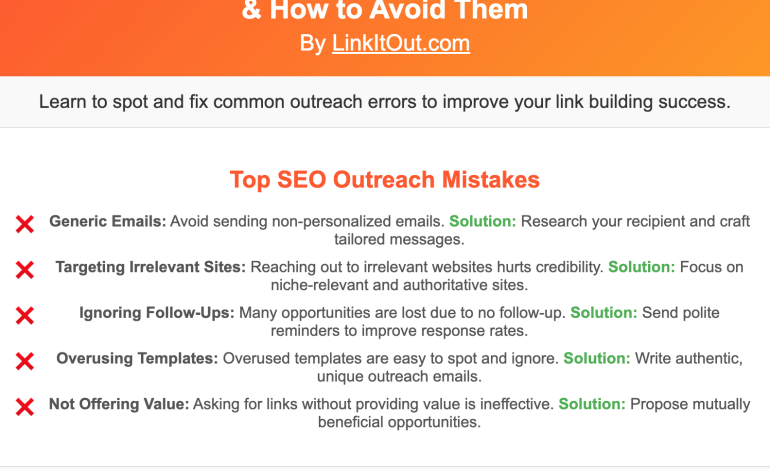
2. Sending Generic Outreach Emails
Generic, mass-sent outreach emails often come across as spammy and are more likely to be ignored. If you’re sending the same message to every recipient without personalization, you’ll significantly decrease your chances of success.
Why It’s a Problem:
People can quickly recognize generic outreach, and it often results in a lack of engagement. Personalized outreach emails show that you’ve taken the time to research and understand the recipient’s content, making them more likely to respond positively.
How to Avoid It:
- Personalize your outreach emails: Mention something specific about their website or content to show that you’ve done your homework.
- Highlight why your content would be valuable to their audience.
- Make your outreach concise and relevant, and provide clear value upfront.
3. Not Providing Value
Simply asking for a backlink without offering value in return is a big mistake. If your outreach doesn’t explain how your content benefits the recipient or their audience, it’s less likely to be successful.
Why It’s a Problem:
People are less likely to link to content that doesn’t provide value. Offering something of benefit in return (whether it’s high-quality content, insights, or collaboration) increases the chances of your outreach being well-received.
How to Avoid It:
- Provide valuable content or insights that complement the recipient’s existing articles.
- Offer to write a guest post or contribute a case study that adds value to their website.
- Consider offering a mutual promotion or cross-promotion deal to further entice the recipient.
4. Ignoring Follow-Ups
One outreach email isn’t always enough. Many people forget to follow up with prospects, assuming that no response means rejection. However, a well-crafted follow-up email can help re-engage the recipient and increase your chances of earning that backlink.
Why It’s a Problem:
The busy nature of content creators and website owners means they may miss your first email or need a reminder. Not following up means missing out on valuable opportunities to build links.
How to Avoid It:
- Send a follow-up email 7-10 days after your initial outreach if you haven’t received a response.
- Keep the follow-up polite and brief, and emphasize the value your content provides.
- If possible, mention any positive response or feedback from others to build credibility.
5. Targeting the Wrong Websites
Targeting websites that aren’t relevant to your industry or niche is a critical mistake in SEO outreach. Even though you may succeed in getting a backlink, it won’t have the same positive impact on your SEO if the website isn’t a good fit for your content.
Why It’s a Problem:
Backlinks from irrelevant websites can confuse search engines, potentially harming your site’s credibility. Google prioritizes context and relevance, so backlinks from unrelated sites will have minimal impact on your rankings.
How to Avoid It:
- Use tools like Ahrefs or SEMrush to find websites that are highly relevant to your niche.
- Look for websites that have a similar audience, so the backlink is contextually relevant.
- Focus on niche-specific blogs or publications rather than generic sites or directories.
6. Overlooking the Importance of Anchor Text
Anchor text plays a key role in how Google interprets the context of your backlinks. Using the wrong or overly optimized anchor text can lead to a penalty or a drop in rankings.
Why It’s a Problem:
Google’s algorithms are designed to spot unnatural link-building practices, and anchor text over-optimization can raise red flags. Too many exact-match keywords in anchor text may result in a Google penalty.
How to Avoid It:
- Use natural, varied anchor text that matches the context of the content where the link is placed.
- Incorporate a mix of branded anchor text, naked URLs, and generic terms to avoid over-optimization.
- Ensure the anchor text is relevant to the content and not forced.
7. Neglecting to Research the Website’s Authority
Not thoroughly researching a website’s authority and trustworthiness can lead to low-quality links. Some websites, even if they appear popular, may not have the authority you think they do.
Why It’s a Problem:
Getting links from websites with low authority or spammy backlinks can hurt your website’s reputation and lead to ranking penalties.
How to Avoid It:
- Use tools like Moz’s Domain Authority or Ahrefs’ Domain Rating to evaluate a website’s authority.
- Avoid sites with suspicious backlink profiles or a history of spammy content.
- Focus on acquiring links from trusted and reputable sources in your industry.
8. Not Tracking Your Outreach Efforts
Another common mistake is failing to track your outreach efforts effectively. Not knowing which websites you’ve contacted or what responses you’ve received can result in missed opportunities and disorganization.
Why It’s a Problem:
Without tracking, you may accidentally reach out to the same website multiple times, or you might forget to follow up with prospects who have shown interest. Poor organization can slow down your link-building efforts and reduce overall success.
How to Avoid It:
- Use a spreadsheet or CRM tool to track your outreach efforts, including the date of contact, website details, response, and follow-up schedule.
- Keep a log of communication to ensure timely follow-ups and organized outreach.
9. Being Pushy or Overly Aggressive
While being persistent is important in outreach, being too aggressive or pushy can harm your chances of securing a backlink. This can create a negative impression and lead to a rejected request or even blacklist your brand.
Why It’s a Problem:
Aggressive tactics can alienate potential partners, and people are unlikely to engage with brands that come off as overly demanding or entitled.
How to Avoid It:
- Always be respectful and courteous in your outreach.
- Understand that not every website will be interested in linking to your content, and that’s okay. Be gracious regardless of the outcome.
- Adopt a professional tone and approach, understanding that link building is about mutual benefit, not just your goals.
Conclusion: Avoid These Mistakes for a Successful SEO Outreach Strategy
SEO outreach is a powerful strategy for improving your website’s rankings, but it’s essential to avoid these common mistakes. By focusing on quality, personalization, and relevance, you can build a sustainable and effective link-building strategy that leads to long-term success.
Take the time to craft thoughtful outreach messages, research the websites you’re targeting, and always provide value in your approach. By following these best practices, you can achieve better results from your SEO outreach efforts and avoid pitfalls that hinder progress.