The Pros and Cons of Using PBNs for Link Building


Link building is a critical aspect of SEO, and over the years, numerous strategies have emerged to help websites improve their rankings on search engines. One of the most controversial tactics is the use of a Private Blog Network (PBN). While PBNs can offer significant benefits in terms of quick SEO gains, they also come with inherent risks. In this post, we’ll break down the pros and cons of using PBNs for link building to help you decide whether this strategy is right for you.
What is a Private Blog Network (PBN)?
A Private Blog Network (PBN) is a network of websites or blogs that are owned by the same entity and are used to build backlinks to a target website. PBNs typically consist of expired or aged domains that have strong backlink profiles, which are repurposed to pass link juice to your target site. The goal is to manipulate search engine rankings by building high-quality backlinks from these controlled websites.
Pros of Using PBNs for Link Building
1. Fast SEO Results
One of the most attractive benefits of using a PBN is the speed at which you can see results. With PBNs, you control the backlinks and can quickly push authoritative links to your target site. This rapid boost can help your website climb the search rankings faster than organic link-building methods, such as guest posting or content marketing, which can take longer to show results.
2. Complete Control Over Link Building
When you build a PBN, you have full control over where your backlinks are placed. You can choose which anchor text to use, which pages to link to, and even ensure that the links come from high-authority sites within your niche. This level of control can be beneficial for targeting specific keywords or pages that you want to rank for.
3. Increased Domain Authority
By leveraging expired domains with high Domain Authority (DA) and a solid backlink profile, you can quickly increase your website’s authority. Backlinks from high-authority domains are seen as more valuable by search engines, which can improve your website’s overall SEO performance. This can lead to better rankings for the pages you link to.
4. Cost-Effective
Building a PBN can be more cost-effective compared to purchasing backlinks from third-party services. Instead of paying for individual backlinks, which can be expensive, you own the domains in your PBN, meaning the long-term costs are lower. Additionally, you can reuse and repurpose these domains for multiple campaigns.
5. Customizable Link Profile
You can tailor your link profile to your website’s specific needs. For example, you can ensure that the links you build come from relevant domains within your niche, which can help you build a natural and diversified backlink profile. This customization makes your backlink strategy more targeted and effective.
Cons of Using PBNs for Link Building
1. Risk of Google Penalties
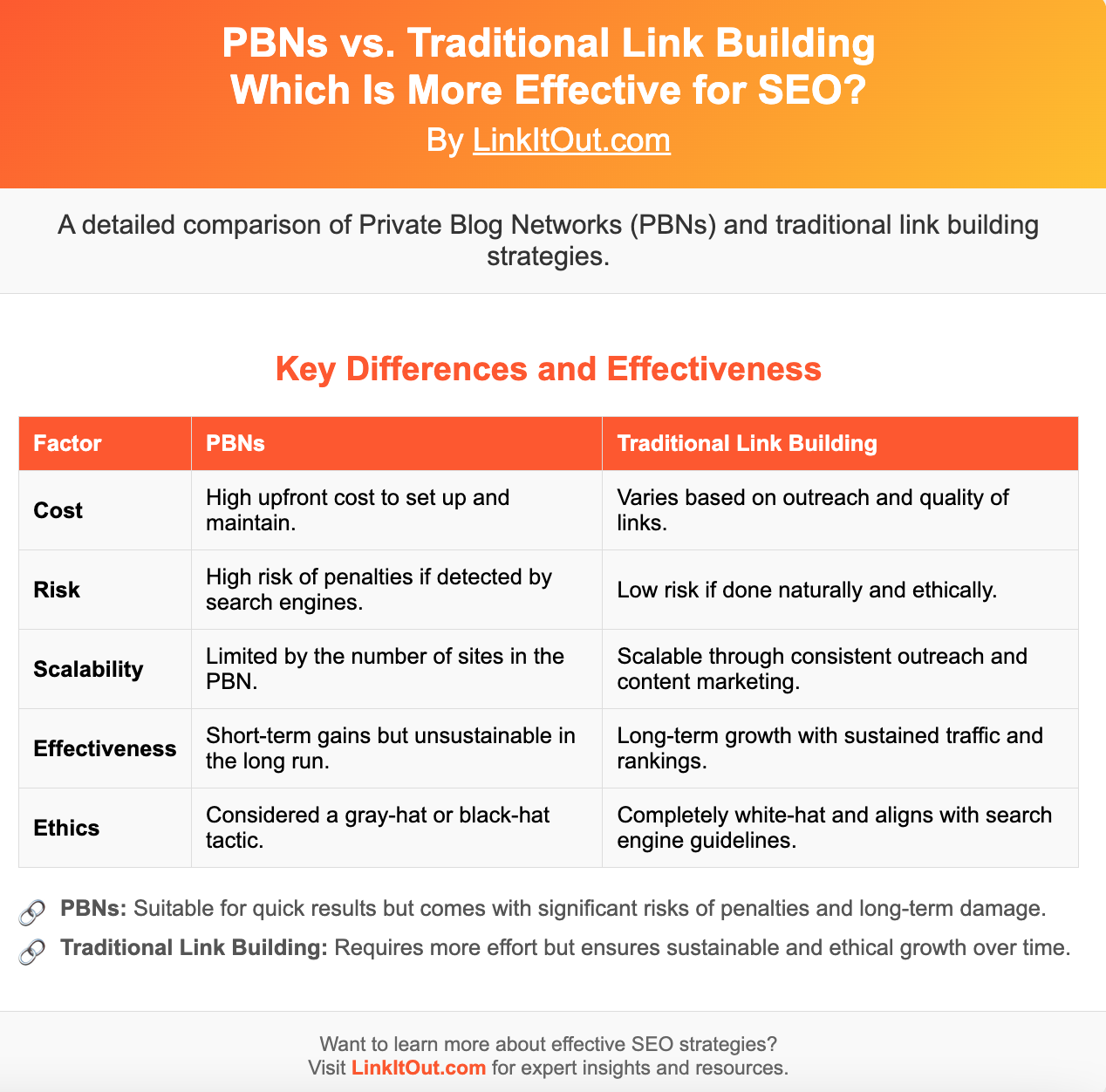
The biggest risk of using a PBN is the potential for Google penalties. Google is extremely adept at identifying manipulative link-building tactics, and PBNs are often detected through signals such as unnatural linking patterns or footprints left by the network. If Google detects that your site is benefiting from a PBN, it could result in a manual penalty, causing your site’s rankings to drop significantly or even being de-indexed from search results entirely.
2. Time and Effort Required to Maintain the Network
Creating and maintaining a PBN requires significant time and effort. You need to regularly update content, monitor the health of your expired domains, and ensure that your network doesn’t raise any red flags. If a domain in your PBN expires or loses its authority, your SEO efforts can be compromised. Additionally, you need to keep your network looking natural by avoiding patterns that could make it obvious to search engines that the sites are owned by the same entity.
3. Ethical Concerns
PBNs are considered a Black Hat SEO tactic by many in the SEO community. Google and other search engines disapprove of manipulative link-building strategies that are designed to artificially inflate a website’s rankings. Using PBNs can harm your website’s reputation and lead to long-term damage if you’re caught. It’s also worth noting that relying on PBNs can damage your brand’s trustworthiness.
4. Potential for Low-Quality Domains
While expired domains can have a strong backlink profile, there’s also a risk that the domains you acquire for your PBN might not be as valuable as expected. Some expired domains may have poor link profiles, spammy backlinks, or even a history of penalties, all of which could harm your SEO efforts. Conducting thorough research and due diligence before acquiring domains is crucial to avoid wasting time and money on low-quality domains.
5. Requires Significant Knowledge and Expertise
Building and managing a successful PBN requires a solid understanding of SEO, link-building strategies, and domain management. You need to be able to identify high-quality expired domains, set up websites properly, create content that doesn’t look spammy, and avoid creating any obvious patterns that search engines could flag. If you lack the necessary skills and expertise, your PBN could backfire and hurt your website rather than helping it.
Conclusion: Are PBNs Worth the Risk?
Using a Private Blog Network (PBN) for link building can provide short-term SEO benefits, such as rapid rankings improvements and increased domain authority. However, these benefits come with significant risks, including Google penalties, ethical concerns, and the time and effort required to maintain the network.
For many SEO professionals, the long-term risks outweigh the rewards, and they prefer to focus on White Hat link-building tactics, such as guest posting, content marketing, and outreach, which provide sustainable results without the dangers of using manipulative tactics.
If you do choose to use a PBN, it’s essential to weigh the potential rewards against the risks and ensure that your tactics are in line with search engine guidelines. In many cases, a more natural, ethical approach to link building will ultimately lead to better and more sustainable SEO results.