How to Build a Successful PBN: A Step-by-Step Guide


A Private Blog Network (PBN) can be a powerful tool for boosting your website’s SEO when executed correctly. By building and controlling a network of authoritative websites, you can manipulate search engine rankings through high-quality backlinks. However, the process is complex, and improper execution can lead to penalties from Google. If you’re considering building a PBN, it’s essential to follow best practices to ensure its effectiveness and minimize risk.
In this step-by-step guide, we’ll walk you through how to build a successful PBN that helps boost your website’s rankings while minimizing the risk of detection.
Step 1: Understand the Risks and Benefits
Before diving into the details of creating a PBN, it’s crucial to understand both the benefits and risks involved.
Benefits:
- Quick SEO Boost: A PBN can provide a rapid increase in rankings by passing link juice from authoritative domains to your target site.
- Full Control: You control the domains, content, anchor text, and links, giving you the flexibility to tailor your SEO strategy.
- Cost-Effective: Building your own PBN can be less expensive than purchasing individual backlinks from third-party services.
Risks:
- Google Penalties: If Google detects your PBN, your site could receive a manual penalty or even be removed from search results entirely.
- Ongoing Maintenance: PBNs require continuous management to avoid detection, which can be time-consuming and resource-intensive.
- Ethical Issues: PBNs are considered a Black Hat SEO technique and may lead to a loss of trust with search engines and users.
Step 2: Choose High-Quality Expired Domains
The success of your PBN relies heavily on the quality of the expired domains you acquire. Here’s how to find the best domains:
Key Criteria:
- Domain Authority (DA): Look for expired domains with high Domain Authority (ideally DA 30 or higher). This is an indicator that the domain has been trusted by search engines in the past.
- Backlink Profile: Analyze the backlink profile of the expired domain to ensure it has quality backlinks from reputable sources. Avoid domains with spammy or low-quality backlinks, as they can harm your SEO.
- Clean History: Use tools like Wayback Machine to check the site’s history. The domain should have a clean, non-spammy history. Avoid domains that were previously penalized or have been used for link farms.
- Topical Relevance: Ideally, the domain should have relevance to your niche or industry. This will help ensure that the backlinks appear natural and relevant to Google.
You can use expired domain marketplaces like Expireddomains.net, or purchase domains through auction platforms such as GoDaddy Auctions or Flippa.
Step 3: Set Up the PBN Sites
Once you have secured your expired domains, it’s time to set up your PBN sites. Proper setup is key to ensuring that your network looks natural to search engines.
Key Setup Considerations:
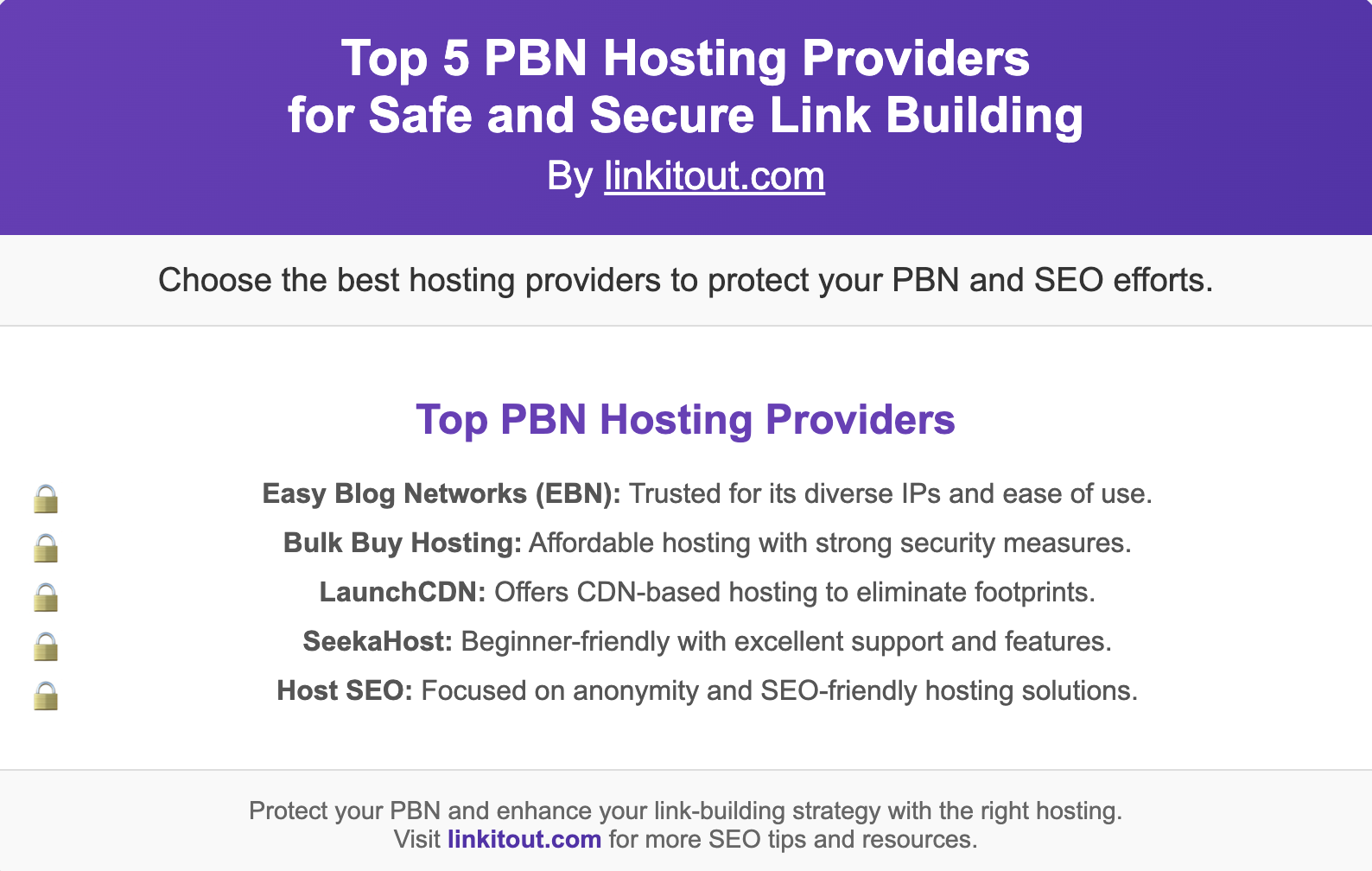
- Hosting: Don’t use the same hosting provider for all your PBN sites. Use multiple hosting providers or a dedicated IP address for each website to avoid footprints. Services like Bulk Buy Hosting or PBN Hosting can provide anonymous hosting options.
- Unique WHOIS Information: Use different WHOIS information for each domain, including different email addresses and contact details. This helps mask the connection between your PBN sites.
- Content: Each site should feature high-quality, original content. Avoid using spun or low-quality content, as Google could flag these sites as unnatural. Regularly update content and make sure the sites look active and valuable to users.
- Design & User Experience: Ensure that the design of each site is professional and user-friendly. A clean, attractive design will help the site appear legitimate to both users and search engines.
Step 4: Add Backlinks to Your Target Site
The next step is to start building links from your PBN to your target website. Here are best practices to follow:
1. Link from Relevant Pages:
Link from pages that are relevant to your target site. For example, if your target site is in the health niche, make sure your PBN site also has relevant content or blog posts about health topics. This will make the links look more natural.
2. Use Diverse Anchor Text:
Avoid using the same anchor text repeatedly. Use a mix of branded, generic, and exact-match anchor texts. Overusing exact-match keywords could raise red flags with Google.
3. Link to Inner Pages:
While it’s important to link to your homepage, you should also include internal links pointing to specific deep pages on your website. This will help distribute link equity across your site and improve rankings for multiple pages.
4. Gradually Build Links:
Don’t build all your links at once. Start by adding a few links over time, and gradually increase the number of links to your target site. This will make the linking process look more natural.
Step 5: Maintain Your PBN
A PBN requires ongoing maintenance to ensure it continues to perform well and doesn’t get flagged by Google.
1. Monitor Backlink Profiles:
Regularly check the backlink profiles of your PBN sites. Ensure that they continue to have high-quality backlinks and remove any low-quality or spammy links that could harm the site’s authority.
2. Update Content:
Add fresh content regularly to keep your PBN sites active and valuable to users. Google prefers websites that are regularly updated with high-quality, engaging content.
3. Keep Hosting and WHOIS Information Separate:
As mentioned, ensure that your PBN sites are hosted on different IPs and have unique WHOIS information. This will help keep your network looking decentralized and reduce the risk of detection.
4. Avoid Over-Linking:
Be mindful of how many links you’re building at once. Too many links in a short period of time can look suspicious to Google. Gradually build up the backlinks and monitor the progress to ensure that the network remains undetected.
Step 6: Diversify Your Link Building Strategy
While PBNs can provide a significant boost to your rankings, it’s important not to rely on them exclusively. Diversify your link-building efforts by using other methods such as:
- Guest Posting: Write guest posts for reputable websites in your niche to build high-quality, natural backlinks.
- Content Marketing: Create shareable, informative content that attracts backlinks organically.
- Broken Link Building: Find broken links on high-authority websites and offer your content as a replacement.
By diversifying your link-building strategy, you reduce the risk of over-reliance on a single tactic and create a more sustainable, long-term SEO plan.
Conclusion: Is Building a PBN Right for You?
Building a Private Blog Network (PBN) can be an effective SEO strategy if done correctly, but it requires careful planning and ongoing effort. While PBNs can provide a quick SEO boost and give you full control over your link-building efforts, they also come with significant risks, especially with the potential for Google penalties.
If you’re willing to put in the time and effort to manage your network properly, a PBN can be a valuable tool in your SEO arsenal. However, it’s crucial to balance PBN usage with other White