PBNs vs. Traditional Link Building: Which Is More Effective for SEO?

When it comes to improving your website’s SEO, backlinks are one of the most important ranking factors. But how you build those backlinks can make all the difference. Two popular strategies for link building are Private Blog Networks (PBNs) and traditional link building methods. Both have their advantages and disadvantages, and understanding which approach is more effective can help you make better decisions for your SEO strategy.
In this post, we’ll compare PBNs and traditional link building to help you determine which method is more suitable for your website’s growth.
What Are PBNs?
A Private Blog Network (PBN) is a network of websites owned and controlled by one entity, used specifically to build backlinks to other sites to improve their search engine rankings. The sites in a PBN typically have expired domains with existing authority, which can be leveraged to pass on link juice to other websites.
How PBNs Work:
- PBNs are set up by purchasing expired or aged domains that have existing domain authority and backlinks.
- These domains are hosted on unique IPs with WHOIS privacy to avoid detection by search engines like Google.
- Backlinks are built from these domains to the target website, aiming to boost rankings for specific keywords.
What Is Traditional Link Building?
Traditional link building refers to methods used to gain backlinks naturally through strategies such as guest posting, influencer outreach, content marketing, directory submissions, and PR campaigns. These methods typically involve building relationships with other websites and engaging in collaborative efforts to earn links.
Common Traditional Link Building Techniques:
- Guest Posting: Writing high-quality content for other blogs and including a link back to your site.
- Content Marketing: Creating valuable content that naturally attracts backlinks from other websites.
- Outreach: Contacting relevant websites or blogs to request a backlink or partnership.
- Public Relations: Building relationships with journalists and media outlets to secure backlinks from news articles and press releases.
PBNs vs. Traditional Link Building: The Key Differences
1. Control Over Links
- PBNs: One of the biggest advantages of using a PBN is the control you have over the backlinks. You own the network of sites, so you can control the anchor text, the type of content, and the frequency of the backlinks.
- Traditional Link Building: Traditional methods often rely on external sites and publishers, so the control over the link placement and anchor text is limited. This can make it harder to get the exact link placement and anchor text you want.
2. Cost and Time Investment
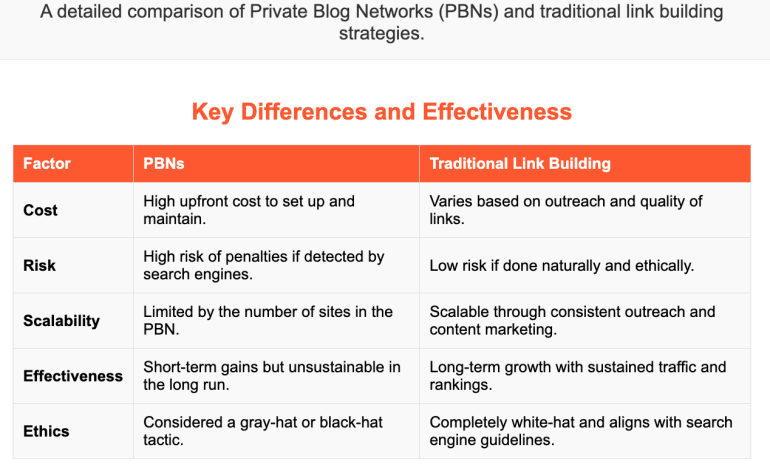
- PBNs: Building and maintaining a PBN can be expensive and time-consuming. You need to purchase expired domains, set up hosting on unique IP addresses, maintain the websites, and create content. The initial setup cost can be high, and ongoing maintenance is necessary to ensure that the network remains undetected by search engines.
- Traditional Link Building: Traditional link-building methods may require less upfront investment in terms of infrastructure, but they still demand significant time and effort. Outreach campaigns, content creation, and building relationships with other websites can be time-consuming. While the cost may be lower in terms of infrastructure, the ongoing efforts to secure quality backlinks can add up.
3. Risk of Google Penalties
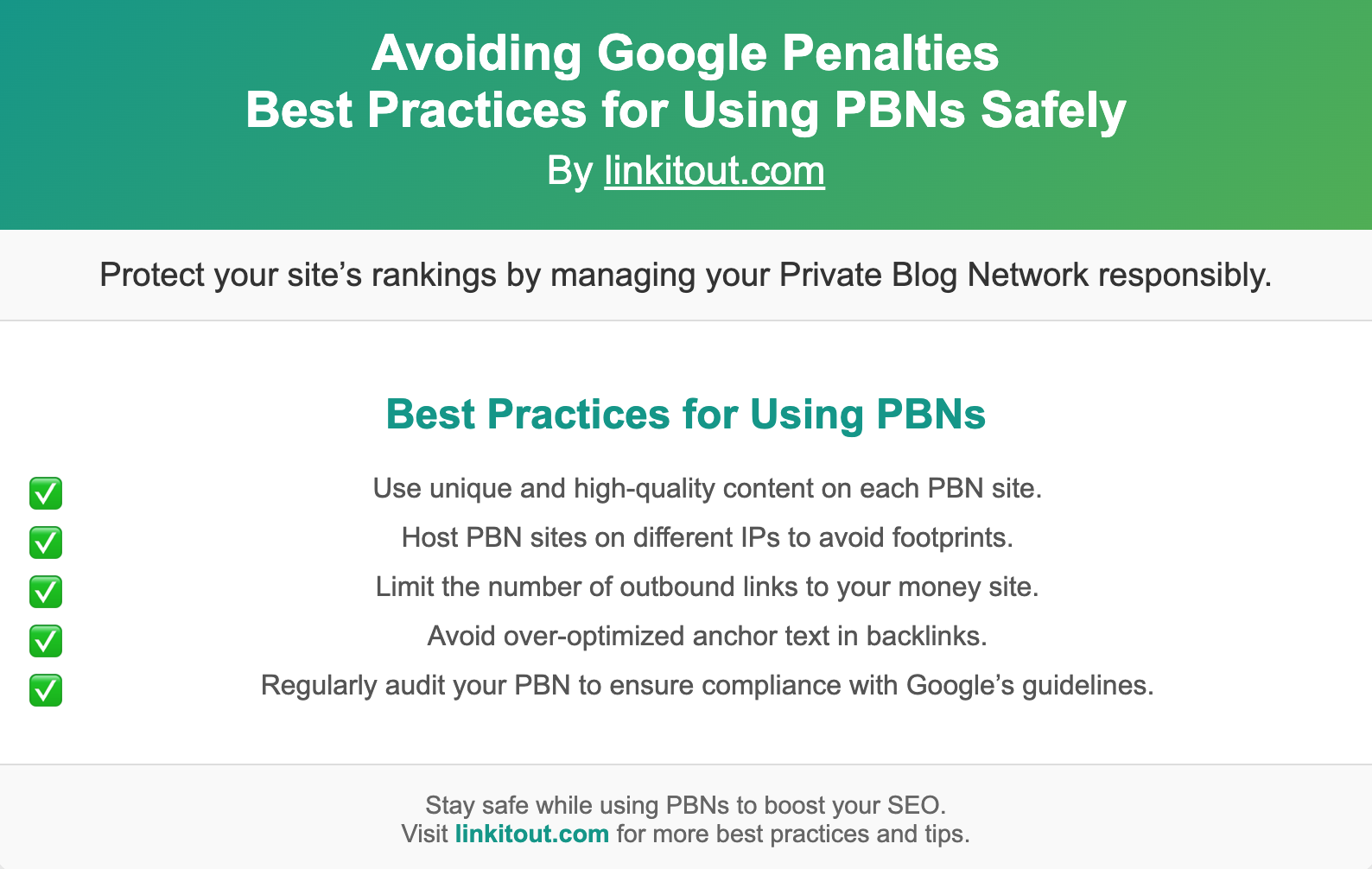
- PBNs: One of the biggest downsides of using PBNs is the risk of Google penalties. Google actively works to detect and penalize sites that manipulate rankings through PBNs. If your network is discovered, your target site could face significant ranking drops or even get de-indexed.
- Traditional Link Building: Traditional link-building methods carry less risk of penalties when done correctly, as they focus on natural, organic links. However, if you engage in manipulative tactics, such as buying links or using excessive anchor text optimization, you could still risk a penalty. Overall, traditional link-building methods tend to be safer in terms of compliance with Google’s guidelines.
4. Quality of Backlinks
- PBNs: The quality of backlinks from PBNs can vary depending on the age and authority of the domains used. If you purchase high-quality expired domains, you can build powerful backlinks that significantly boost your SEO. However, low-quality or irrelevant domains can do more harm than good.
- Traditional Link Building: With traditional link-building methods, the quality of backlinks is typically higher, as the links are earned from authoritative, relevant websites. Guest posting on reputable blogs or collaborating with influencers can result in high-quality backlinks that are highly valued by Google.
5. Scalability
- PBNs: PBNs can be scaled quickly, especially if you have the resources to purchase multiple expired domains and manage a large network of sites. You can increase the number of backlinks to your target site at a much faster pace compared to traditional methods.
- Traditional Link Building: Scaling traditional link-building efforts requires more time and effort, as it involves building relationships, pitching content, and securing backlinks from high-quality sources. While it can be done at scale, it typically takes longer and requires more effort to reach the same level of backlinks as a PBN.
Which Is More Effective for SEO?
PBNs: Pros and Cons
Pros:
- Complete control over backlinks.
- Faster results with the ability to scale quickly.
- No reliance on third-party sites for link placement.
Cons:
- High initial investment and ongoing maintenance costs.
- High risk of Google penalties if detected.
- Requires constant monitoring to avoid footprints.
Traditional Link Building: Pros and Cons
Pros:
- Safer and more sustainable in the long run.
- Natural link profile that adheres to Google’s guidelines.
- Builds long-term relationships with authoritative sites.
Cons:
- Takes more time and effort to secure quality backlinks.
- Harder to control anchor text and link placement.
- Requires a consistent outreach strategy.
Conclusion: Which Should You Choose?
Ultimately, the decision between using PBNs or traditional link building depends on your SEO goals, resources, and risk tolerance.
- If you’re looking for fast results and are willing to invest in a network of sites, PBNs can be an effective strategy. However, it’s important to manage the risks carefully and avoid using manipulative tactics that could lead to penalties.
- On the other hand, if you’re looking for a sustainable, long-term strategy that follows Google’s guidelines and doesn’t carry the same risks, traditional link building is the way to go. While it takes more time and effort, it results in higher-quality, safer backlinks that can help build a solid online presence over time.
Both methods have their place in SEO, and many successful SEO strategies incorporate a mix of both approaches. Whether you choose PBNs, traditional link building, or a combination of both, always focus on providing value, building authentic relationships, and creating high-quality content that attracts natural backlinks.